Limak Hotels – Brand Blog
A Refined Weekend Guide to Istanbul's Culture, Dining and City Views
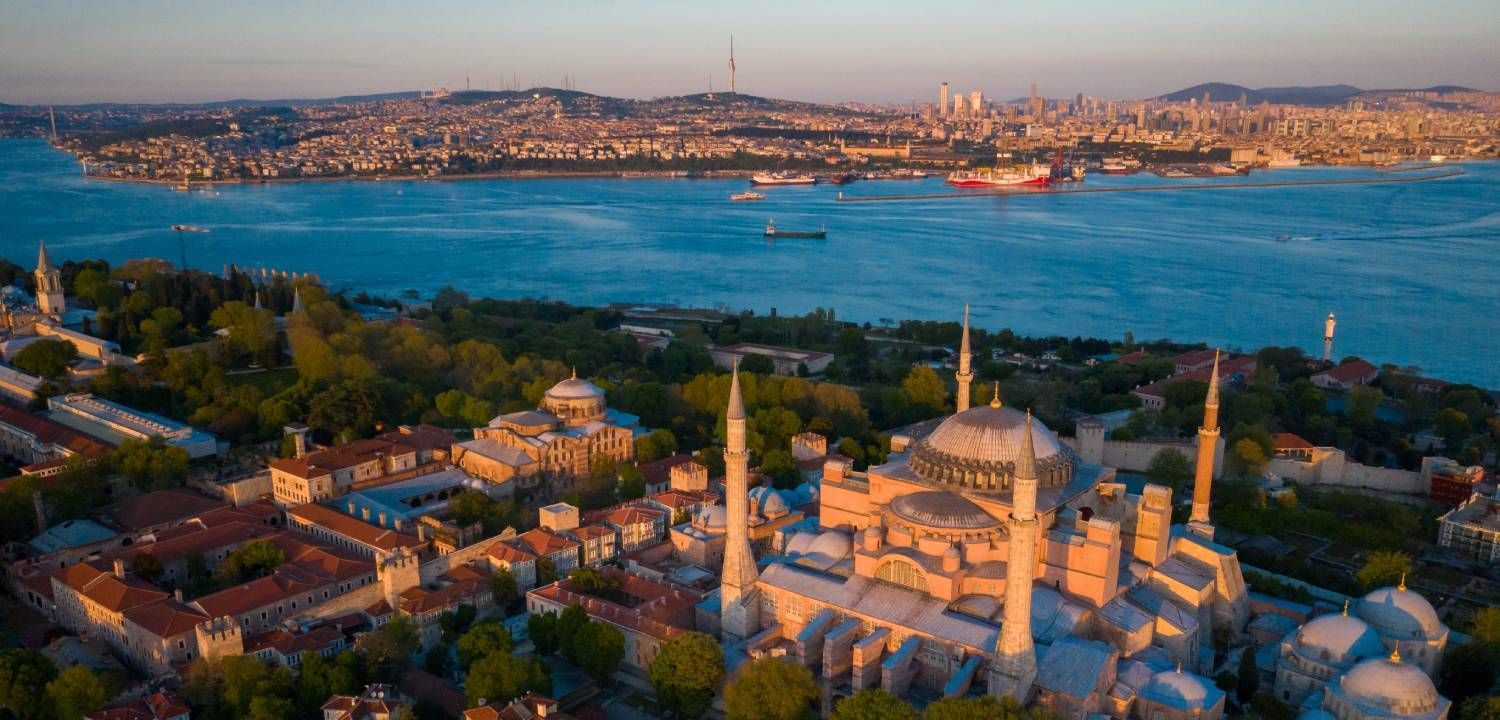
Istanbul rewards the selective visitor. In a single weekend, the city offers Byzantine architecture, world-class dining, and views across two continents. The key is knowing where to stay, what to prioritise, and how to move between its layers without losing pace.
Two continents. One city. The arithmetic has never quite explained Istanbul — it only marks the beginning of the question. A place where a 1,500-year-old basilica stands a short walk from a rooftop bar pouring natural wine at midnight. A weekend here, handled with care, is enough to understand why this city has held the world's attention for centuries. Not a highlight reel. A genuine encounter with a place that has been, at various points in history, the capital of three empires.
The visitor who arrives with a clear sense of purpose — two or three cultural anchors, one serious meal, one unrepeatable view — will leave with more than photographs.
What Are the Essential Cultural Sites to Visit in Istanbul?
Begin with Hagia Sophia — not because it is famous, but because nothing else quite prepares you for its scale. Built in 537 AD, its dome appears to float without support. The geometry is not decorative. It is structural argument.
The Blue Mosque, a short walk across Sultanahmet square, answers with six minarets and 21,000 hand-painted İznik tiles. The Topkapı Palace requires at least half a day — its treasury, harem quarters, and views over the Bosphorus make it the most layered of the city's historical sites.
For those drawn to Islamic art, the Museum of Turkish and Islamic Arts on the Hippodrome holds one of the world's finest collections, presented without excess. The Basilica Cistern, a sixth-century underground reservoir supported by 336 columns, requires no more than forty minutes — but those forty minutes tend to reframe the entire visit.
Istanbul's cultural sites are not isolated monuments. They are chapters in a longer argument about what civilisation looks like when it accumulates without pause across fifteen centuries.
Where Should You Eat in Istanbul for a Serious Dining Experience?
Istanbul dining has matured sharply. The city now supports restaurants that would hold their own in any European capital — without the self-consciousness that often accompanies ambition.
Mikla, perched above Beyoğlu with panoramic city views, remains the standard-bearer for modern Turkish cuisine. Chef Mehmet Gürs draws on ingredients from across Anatolia with consistent precision. Neolokal, in the Salt Galata building, applies that same precision with academic seriousness — sourcing from small producers across Turkey and presenting the results with uncommon clarity.
For something older and less formal, the fish restaurants of Karaköy serve grilled catch from the Bosphorus with rakı and a directness that no interior design can replicate. Eminönü's waterside balık ekmek — grilled mackerel pressed into bread, sold from boats moored at the quayside — is the city in its most unguarded form.
What the best Istanbul tables share is restraint. The Anatolian pantry — pomegranate molasses, sumac, slow-cooked lamb, wood-fired flatbreads — does not require embellishment. It requires precision. A serious dining experience here does not begin and end at dinner. It runs through the entire day, from the first glass of tea to the final glass of rakı.
How to Experience Istanbul's Best City Views
The view from Galata Tower, built in 1348, orientates you within the city's geography. For something quieter, the terrace at Pierre Loti Hill — reached by cable car through a historic cemetery — looks directly down the Golden Horn at dusk. The light here, as the call to prayer moves across the water, is the kind that makes people alter their onward plans.
The Bosphorus, seen properly, requires a boat. The public ferry from Eminönü to Üsküdar crosses in twelve minutes and costs almost nothing. From midwater, the city reveals its full extent — minarets, domes, hills, and two suspension bridges holding Europe and Asia apart.
The longer Bosphorus route, running north to Anadolu Kavağı near the Black Sea mouth, takes the better part of a morning and returns you to the city with a sense of its full geography that no map can provide. The wooden yalı mansions along the European shore are best seen from the water. From the street, they are hidden. From the ferry, they appear without warning — faded, dignified, and entirely resistant to the surrounding century.
What to Do in Istanbul's Neighbourhoods Beyond the Historic Centre?
Beyoğlu and Cihangir hold the city's most considered retail — independent bookshops, small galleries, tailors who have occupied the same address for decades. The Çukurcuma district is the place for antiques: Ottoman kilims, maps, and copper vessels.
Kadıköy, on the Asian side, is a different city within the same city. Its market — fish, spice, cheese, fresh bread — operates at a pace the European side rarely allows. The neighbourhood's café culture is unhurried and entirely local.
Balat, the former Jewish quarter on the Golden Horn, draws a quieter crowd of visitors who have tired of Sultanahmet's density. Its small Orthodox churches and Greek-era apartment buildings speak of a cosmopolitanism the city once wore more openly. The Bosphorus villages — Bebek, Arnavutköy, Ortaköy — each sustain a character the centre has largely lost: waterfront tea gardens, small fish restaurants, and the ease of a neighbourhood that knows its own identity.
Istanbul's neighbourhoods are not amenities. They are the city's actual substance.
Elevate Your Istanbul Stay with Limak Hotels
A weekend in Istanbul loses nothing by being comfortable. The quality of the base determines the quality of the return.
Among the many Istanbul hotels, Limak Eurasia Luxury Hotel stands apart with its position on the Asian shore, offering direct views of the Bosphorus and the Istanbul skyline. With easy access to Kadıköy, a peaceful setting away from the city's busiest districts, a spa, rooftop terrace, considered dining, and service that understands the value of discretion, it provides a different way to experience the city.
A hotel on the Asian shore places you in a different relationship to Istanbul. Quieter in the early morning. Ferry access to the European side makes the crossing feel deliberate rather than automatic. That deliberateness changes how you experience the city. You arrive with intention. You return with perspective.